
Need Help? (866) 498-6634
  • VIEW ALL RESOURCES
California Telehealth Resource CenterCalifornia Telehealth Resource CenterCalifornia Telehealth Resource CenterCalifornia Telehealth Resource Center
  • About CTRC
    • Our Mission
    • How We Do it
    • Our Team
    • Our Advisory Board
  • Tools and Resources
    • For Providers
    • Payment & Regulation
      • Digital Health Payment Guide
        • Digital Health Services Payment Guide Door 1
        • CTRC Digital Payment Guide – Door 2
    • Rural Health
    • Artificial Intelligence
    • Remote Physiological Monitoring
    • School-Based Telehealth
    • Patient Resources
    • Videos
    • Sustainability Calculator
    • Equipment Selection Tool
    • CTRC Blogs
    • CTRC Newsletters
  • Training and Education
    • CTRC Telehealth Online Courses
    • TeleHealth Course Finder
    • National Consortium of TRCs
    • Telehealth Summit
  • Events Calendar
  • Contact Us

From “Rural Bypass” to Regional Capacity: Building CA Hub-and-Spoke Specialty Care

    Home Blog From “Rural Bypass” to Regional Capacity: Building CA Hub-and-Spoke Specialty Care
    NextPrevious

    From “Rural Bypass” to Regional Capacity: Building CA Hub-and-Spoke Specialty Care

    By Jocelyn Jaime | Blog, Get Started, Grow Your Program, News, Rural | 0 comment | 17 January, 2026 | 0

    January 16, 2026

    By Sylvia Trujillo, MPP, JD and Emilia Ochoa-Ruiz, MS, PMP


    Rural communities across California are facing a familiar pattern. When specialty access is limited and travel distances are long, patients often bypass local care to seek services elsewhere. This can result in delayed care, fragmented follow-up, or care that never happens at all. California’s emerging rural transformation proposals are explicitly designed to reverse this gravitational pull by strengthening local delivery systems and building rural hospital-led regional hub-and-spoke networks that make specialty support predictable, timely, and sustainable. 

    Within the Rural Health Transformation Program overview, a core strategy is to connect regional rural hospital hubs with local clinics and telehealth spokes. The goal is to expand specialty access and enhance care coordination through transformation payments and evidence-based care models. 

    What is especially compelling about California’s approach is the explicit emphasis on a digital “nervous system.” This is not positioned as a technology add-on, but as the connective tissue that makes regional capacity real. The program overview highlights real-time telehealth specialty access, eConsults, and remote patient self-monitoring as foundational tools to extend workforce reach and keep care local. The objective is not simply to add video visits. It is to create a repeatable pathway for rural primary care teams to reliably access specialty input, stabilize patients closer to home, and strengthen follow-up so fewer patients fall through gaps after discharge or referral. 


    Designing Models That Reduce Friction 

    Operationally, rural hub-and-spoke strategies are most effective when designed to reduce friction. This means minimizing delays, paperwork, and uncertainty for both patients and clinicians. For many rural communities, the most efficient approach is a blended specialty access model that includes: 

    • Real-time tele-specialty care for situations where a specialist’s direct involvement is needed, such as complex medication decisions, maternal health consults, or specialty triage. 
    • eConsults when primary care clinicians can manage patients locally with timely specialist recommendations. These models are often lower cost and easier to scale. 
    • Remote monitoring during the time between visits, particularly following emergency department visits or hospital discharge, so early signs of deterioration are detected and managed before escalation is required. 

    Defining the Hub’s Clinical Identity 

    For organizations pursuing regional transformation funding, an essential early question is, “What should our hub be known for?” The strongest hubs do not attempt to cover every specialty. Instead, they focus on service lines that align with community needs and organizational readiness. Common examples include tele-behavioral health, cardiology support for hypertension and congestive heart failure, diabetes optimization, maternal health access, dermatology, post-discharge virtual ward monitoring, or telestroke partnerships. 

    Once priorities are defined, successful hubs standardize workflows, build shared specialty networks, and create a single front door for referrals and eConsults. Governance is as critical as technology. Credentialing, escalation protocols, cross-coverage agreements, downtime plans, documentation standards, and feedback loops with primary care teams are what transform telehealth from episodic encounters into a reliable system of care. 

    Field Notes for 2026 Planning 

    • If referral routing is not simple, digital health tools quickly become perceived as extra work, and utilization drops. Ordering an eConsult or tele-specialty visit should be as easy as ordering a lab. 
    • Start with one specialty where clinicians already feel the strain, such as long wait times, frequent transfers, or repeat emergency department visits. Early wins build trust and momentum. 
    • Map workflows before purchasing technology. Platforms and devices should support the care model, not dictate it. 
    • Engage CTRC early to evaluate readiness and vendor options, helping organizations avoid costly missteps. 

    Provider Lens 

    Rural Hospitals and Critical Access Hospitals (CAHs)

    Rural hospitals are well positioned to serve as regional clinical hubs offering structured tele-specialty coverage for surrounding clinics and, when appropriate, neighboring hospitals. California’s Rural Health Transformation Fund proposal explicitly supports hub-and-spoke networks supported by a digital care infrastructure to increase specialty access. For CAHs, the most sustainable early use cases often focus on reducing avoidable transfers and readmissions through post-discharge monitoring, emergency department consult pathways, and appropriate use of eConsults.

    Rural Health Clinics (RHCs) and Federally Qualified Health Centers (FQHCs)/Community Health Centers

    Because RHCs and FQHCs operate under distinct payment structures and reporting requirements, hub-and-spoke models are most valuable when they reduce referral delays and downstream costs. Predictable specialty tele-sessions can be particularly impactful. For Medi-Cal providers, state telehealth definitions and consent documentation requirements should be embedded into workflows from the outset.

    Community Providers and Independent Practices

    For fee-for-service and independent providers, hub-and-spoke models can succeed when supported by clear contracting and operational expectations. Key considerations include
    documented clinical indications, streamlined scheduling, and a strong follow-up loop so telehealth contributes to a comprehensive care plan rather than a single isolated visit. Vendor contracts should support interoperability, audit trails, and data export to ensure scalability and avoid long-term lock-in.

    Patient Corner 

    If you live far from a large medical center, telehealth can help you access specialty care without traveling as often. Sometimes you may see a specialist by video. In other cases, your local clinician may send questions to a specialist electronically through an eConsult and then provide treatment locally. You may also be offered home monitoring, such as checking blood pressure or weight. If monitoring is part of your care plan, it is reasonable to ask, “What happens if my readings are out of range?” and “Who should I contact after hours?” 


    CTRC Call to Action 

    • Use CTRC’s Equipment Selection Guide before purchasing telehealth hardware or peripheral devices. 
    • Download CTRC’s Telehealth Technology Vendor Considerations Toolkit to guide procurement decisions. 
    • Explore CTRC’s eConsult workflow resources to design efficient specialty collaboration. 
    • Start with CTRC’s Getting Started pathway and request technical assistance for hub-and-spoke planning. 


    References 

    Centers for Medicare & Medicaid Services. (2023). Rural Health Transformation Program overview. Rural Health Transformation (RHT) Program | CMS 

    Dorsey, E. R., & Topol, E. J. (2020). Telemedicine 2020 and the next decade. The Lancet, 395(10227), 859–860. https://doi.org/10.1016/S0140-6736(20)30424-4 

    Lin, C. C., Dievler, A., Robbins, C., Sripipatana, A., Quinn, M., & Nair, S. (2018). Telehealth in health centers: Key adoption factors, barriers, and opportunities. Health Affairs, 37(12), 1967–1974. https://doi.org/10.1377/hlthaff.2018.05125 

    Totten, A. M., Womack, D. M., Eden, K. B., McDonagh, M. S., Griffin, J. C., Grusing, S., & Hersh, W. R. (2016). Telehealth: Mapping the evidence for patient outcomes from systematic reviews. Agency for Healthcare Research and Quality. https://www.ncbi.nlm.nih.gov/books/NBK379320/ 

    Vimalananda, V. G., Gupte, G., Seraj, S. M., Orlander, J., Berlowitz, D., Fincke, B. G., & Simon, S. R. (2015). Electronic consultations (eConsults) to improve access to specialty care. Journal of General Internal Medicine, 30(7), 971–979. https://doi.org/10.1177/1357633X15582108  

    RURAL, telehealth

    Related Posts

    • Why Rural & Community Providers Must Begin Their AI Innovation Strategy Today

      By Emilia Ochoa-Ruiz | 0 comment

      Published November 14, 2025 By Sylvia Trujillo, MPP, JD A Message to C-Suite Leaders Facing Shrinking Resources, Workforce Strain, and Growing Demand Across rural and small-community health organizations, you’re facing a daunting combination: reimbursement pressures (includingRead more

    • Telehealth as a Lifeline: Improving Maternal Health Outcomes

      By Jocelyn Jaime | 0 comment

      January 13, 2026 By Emilia Ochoa-Ruiz, MS, PMP Manager, California Telehealth Resource Center Maternal Health Day is more than a date on the calendar. It is a call to action to strengthen access to safe,Read more

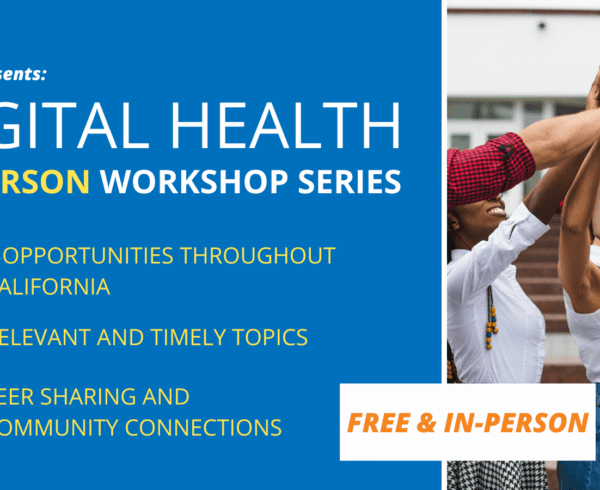
    • Join Our Transformative Digital Health Workshop in California! 

      By Mariah Getch | 0 comment

      Join us for an exciting Digital Health Workshop where you can acquire important tools and information to support practice transformation!

    • Hands together to show that leveraging digital modalities to support transitions to value-based delivery and payment in California is successful.

      Value-Based Delivery Transformation: Digital Strategies for Medi-Cal

      By Mariah Getch | 0 comment

      The California Telehealth Resource Center (CTRC), a federally funded nonprofit, is dedicated to the successful implementation of virtual care within California. Our mission goes beyond simply supporting the adoption of evidence-based digital health tools intoRead more

    • A man with a blood pressure cuff monitoring his vitals from home showing the benefits of digital health for promoting health equity in California.

      Why Should I Offer RPM? Benefits, Tools, Policy, & More

      By Mariah Getch | Comments are Closed

      As a preamble to the upcoming Advances in Remote Patient Monitoring Learning Event co-hosted by CTRC and the California Health Care Foundation, this blog delves into the world of RPM and its role in the future of health care.

    Leave a Comment

    Cancel reply

    Your email address will not be published. Required fields are marked *

    NextPrevious
    California Telehealth Resource Center

    The California Telehealth Resource Center (CTRC) is a leading source of knowledge and education for telehealth providers, patients, and safety net populations across California. A proud part of the National Consortium of Telehealth Resource Centers.

    Phone: (866) 498-6634

    Grow Your Telehealth Knowledge

    • Equipment Selection Tool
    • TeleHealth Course Finder
    • Sustainability Calculator
    • All Resources
    • Success Stories

    Popular Resources

    • California Legislation & Regulatory Updates
    • National Consortium of TRCs
    • How Do I Use Telehealth?
    • Telehealth Specialty Provider List
    • Clinic-to-Patient Specific Workflow

    Sign Up for Our Newsletter


    The California Telehealth Resource Center (CTRC) and all resources and activities produced or supported by the CTRC are made possible by grant number U1UTH42520-01-01 from the Office for the Advancement of Telehealth, Health Resources and Services Administration, DHHS. This information or content and conclusions are those of the CTRC and should not be construed as the official position or policy of, nor should any endorsements be inferred by HRSA, HHS, or the U.S. Government. The information and tools presented on the California Telehealth Resource Center’s (CTRC) website are intended for general information purposes only and are not intended or implied to be a substitute for professional legal and billing advice. We recommend discussing billing and legal decisions with your organization’s compliance officer to ensure agreement or consulting with an attorney regarding any legal issue. All materials are strictly for informational and educational purposes only.
    • About CTRC
      • Our Mission
      • How We Do it
      • Our Team
      • Our Advisory Board
    • Tools and Resources
      • For Providers
      • Payment & Regulation
        • Digital Health Payment Guide
          • Digital Health Services Payment Guide Door 1
          • CTRC Digital Payment Guide – Door 2
      • Rural Health
      • Artificial Intelligence
      • Remote Physiological Monitoring
      • School-Based Telehealth
      • Patient Resources
      • Videos
      • Sustainability Calculator
      • Equipment Selection Tool
      • CTRC Blogs
      • CTRC Newsletters
    • Training and Education
      • CTRC Telehealth Online Courses
      • TeleHealth Course Finder
      • National Consortium of TRCs
      • Telehealth Summit
    • Events Calendar
    • Contact Us
    California Telehealth Resource Center